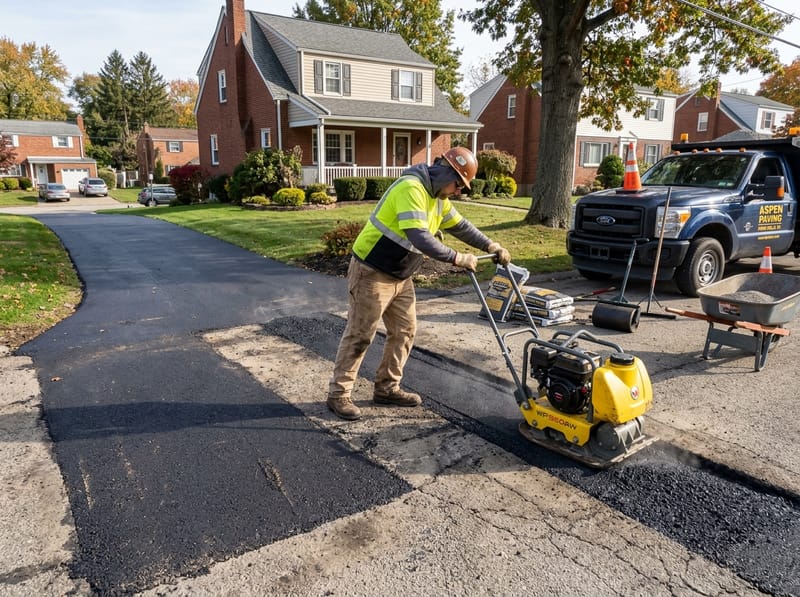
What This Service Involves
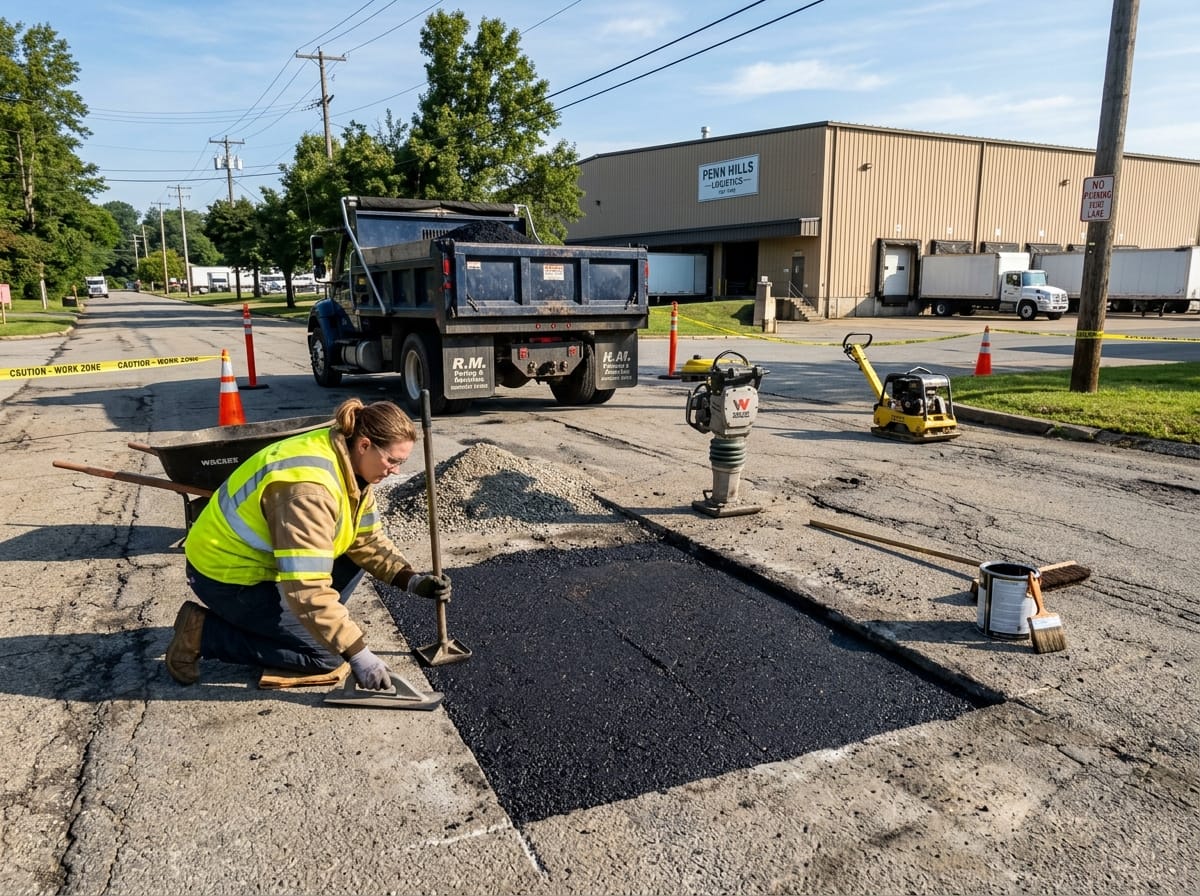
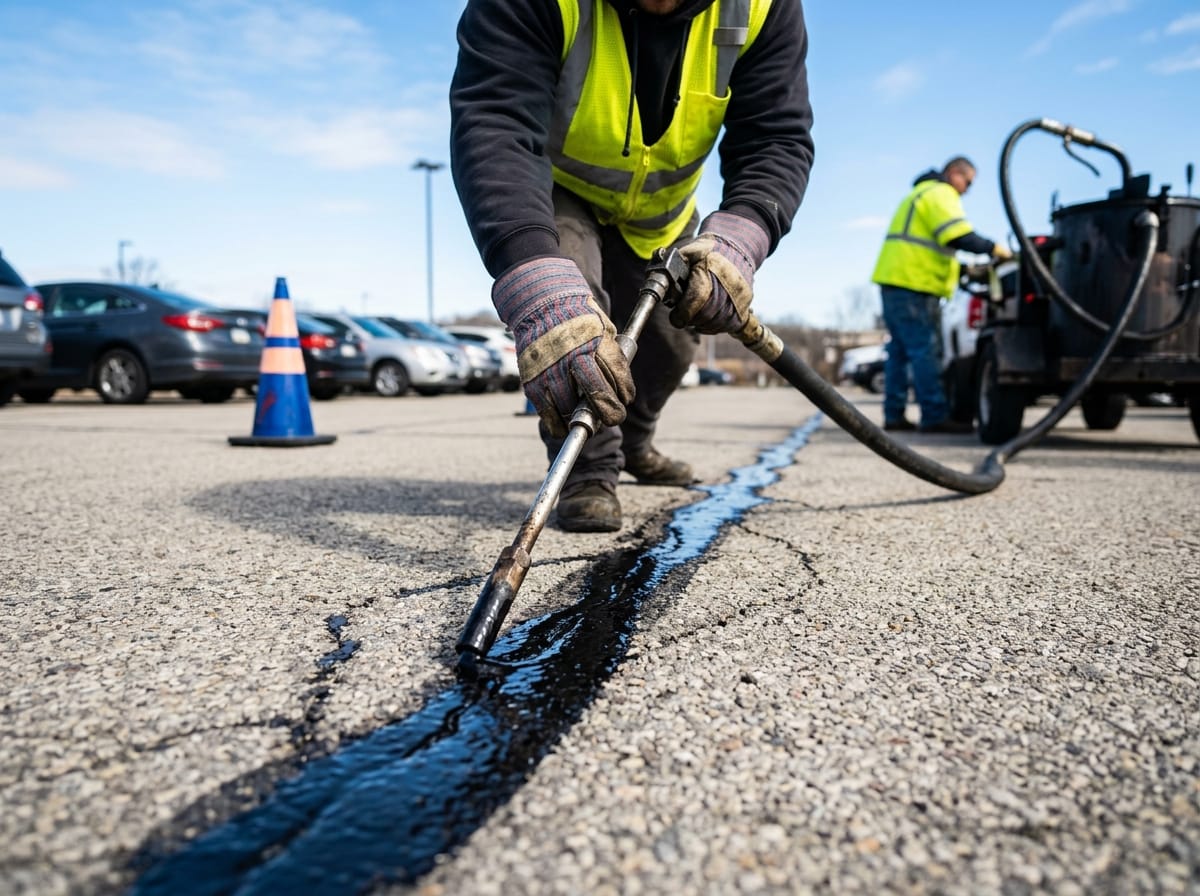
Asphalt repair in Penn Hills is the process of fixing damaged pavement so your driveway or parking area works the way it should again. For homeowners in Penn Hills, PA, this service can involve patching potholes, sealing or filling cracks, correcting broken edges, smoothing rough spots, and rebuilding areas where the surface has started to fail.
At Asphalt Pros of Penn Hills, the goal is not just to cover up the problem. The repair work is designed to address the damaged section, support the surrounding pavement, and restore a cleaner, safer surface that handles daily traffic better. When the damage is localized, a targeted repair is often the most practical way to protect your asphalt without replacing the entire driveway.
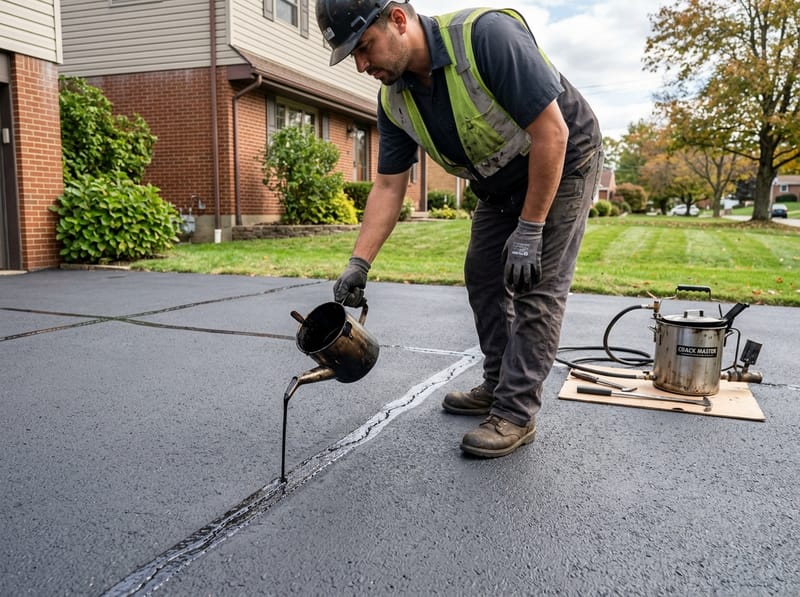
The exact method depends on what your pavement needs. Some repairs call for cleaning out loose material, preparing the surface, and installing a patch that bonds to the surrounding asphalt. Other situations require crack treatment, edge rebuilding, or surface leveling so water can move away instead of sitting in weak spots.
Good asphalt repair also includes proper preparation. The crew needs to remove debris, evaluate how deep the damage goes, and make sure the surrounding area is stable enough to support the new material. That preparation matters because asphalt performs best when the repair is built on a solid base, not just placed over visible damage.
Homeowners often choose this service when they want a focused fix that improves function right away. If your pavement is still mostly sound but has problem areas that keep getting worse, asphalt repair can be the right step to protect the surface and keep the driveway useful.
When You Need This Service
You likely need asphalt repair in Penn Hills when the surface starts showing signs that the pavement is breaking down rather than just looking worn. Common warning signs include cracks that keep spreading, potholes that are growing, areas that crumble at the edges, and spots that collect water after rain.
You should also pay attention if your driveway feels uneven underfoot, if vehicle tires sink slightly into soft areas, or if sections look darker, rutted, or loose. Those clues often mean the asphalt has lost strength in one or more areas and needs attention before the damage spreads farther.
Some homeowners wait until the problem becomes obvious from the street. That usually makes the repair more involved than it needed to be. Small cracks can let water enter the pavement, and once moisture gets inside, freeze and thaw cycles can widen the damage. A minor issue in spring can become a larger failure by the time cold weather returns.
If your driveway is still structurally sound overall, repair is often the right move. It is especially useful when the damage is contained to a few sections, such as a pothole near the garage, cracking near the street, or broken edges where vehicles turn in and out every day.
- Cracks that keep widening or branching outward
- Potholes or sunken spots that catch water
- Raveling, where loose asphalt grains come off the surface
- Edges that are breaking down near grass, soil, or curbs
- Uneven areas that create drainage problems
- Rough patches that make driving or walking less comfortable
If you see more than one of these issues on your Penn Hills property, a professional evaluation can help you decide whether repair is enough or whether the pavement needs more extensive work.
Why Problems Happen
Asphalt problems usually begin with stress, moisture, and age-related wear. In Penn Hills, driveways deal with changing temperatures, rain, snow, vehicle traffic, and repeated expansion and contraction. Over time, those forces can weaken the surface and open the door to cracking or settlement.
Water is one of the biggest causes of asphalt damage. When water gets into a crack or weak spot, it can soften the base below the surface. During colder weather, that trapped moisture expands and puts pressure on the surrounding asphalt. That cycle can turn a small line in the pavement into a pothole or a broken patch.
Heavy vehicles, sharp turning movements, and regular braking also contribute to wear. Areas where tires turn in place, such as the ends of a driveway or parking pad, often break down faster because they take more friction and pressure. If the base below the asphalt was not compacted well enough or has shifted over time, the surface can fail sooner in those same spots.
Drainage issues are another common cause. If water flows toward the driveway instead of away from it, the pavement stays wet longer and wears out faster. Standing water can also reveal low spots that need repair so the surface drains properly again.
In plain terms, asphalt fails when the surface, the base, or both can no longer handle everyday conditions. That is why a skilled repair approach matters. The right fix does more than cover a visible crack; it addresses the reason the pavement is breaking down in the first place.
What Affects Cost
The cost of asphalt repair in Penn Hills depends on the condition of your pavement and how much work it takes to restore it properly. A small crack repair is a different job from a pothole patch or a section that needs rebuilding because the base has weakened.
The size of the damaged area is one of the biggest factors. Larger repairs require more material, more preparation, and more time to complete. Depth matters too, because surface-only damage is easier to fix than a problem that reaches below the top layer and into the base.
Access can also affect the scope of the job. If the repair area is tight, awkward, or broken up in several places, the work may take longer because the crew needs to prepare each section carefully. The condition of the surrounding asphalt matters as well, since weak edges or nearby cracks may need attention to keep the patch from failing early.
Other practical factors include drainage, cleanup, and whether the repair area needs extra preparation before new asphalt can be installed. If the existing surface has loose debris, standing water issues, or soft spots underneath, those conditions must be corrected for the repair to hold up.
For homeowners, the important question is not just what the repair costs. It is what you are protecting by doing the work now. Fixing the problem while it is still manageable can help you avoid larger damage, reduce the chance of trip hazards, and extend the useful life of the pavement you already have.
Repair vs. Replacement
Repair and replacement serve different purposes, and the right choice depends on how much of the pavement is still in good shape. In Penn Hills, asphalt repair is often the better option when the damage is limited to specific areas and the rest of the driveway remains stable.
Repair makes sense when the surface has cracks, potholes, or worn sections, but the driveway still has a solid structure overall. In those cases, targeted work can restore function and improve appearance without replacing the entire surface. This is often the most efficient choice for homeowners who want a practical fix with less disruption.
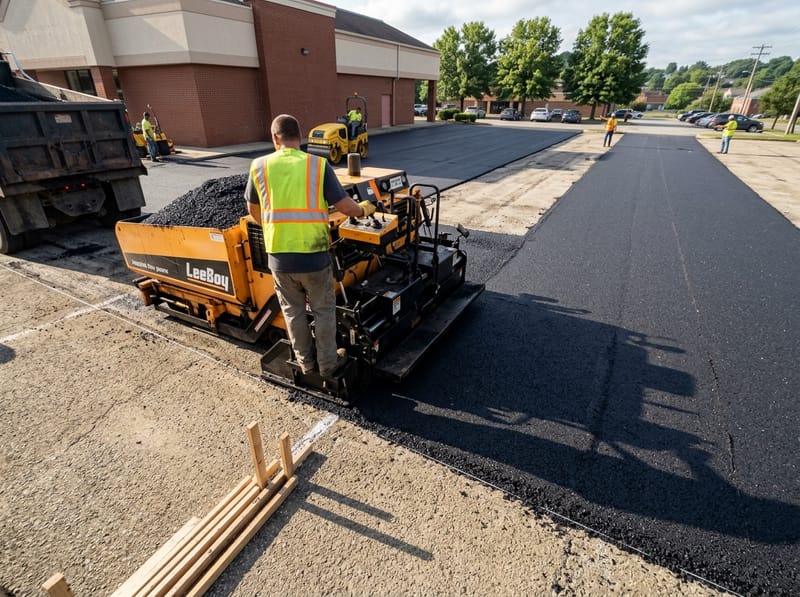
Replacement becomes more appropriate when the pavement has widespread failure. If the driveway has repeated potholes, extensive cracking, major sinking, or base failure across large sections, patching the surface may only provide a short-term result. When the underlying structure is too far gone, rebuilding the driveway can be the smarter long-term investment.
A professional assessment helps you avoid overfixing a driveway that really needs replacement, or underfixing a driveway that could still be saved. Asphalt Pros of Penn Hills looks at the extent of the damage, how the surface is performing, and whether the base can support a lasting repair before recommending the next step.
The simplest rule is this: repair is best for isolated damage, while replacement is better for widespread failure. If you are not sure which direction your Penn Hills driveway needs, a careful inspection can give you a clear answer.
How The Repair Process Works
A quality asphalt repair job in Penn Hills starts with inspection. The damaged area is reviewed to identify the visible problem and the hidden cause beneath it. That step matters because the surface damage often shows only part of the story.
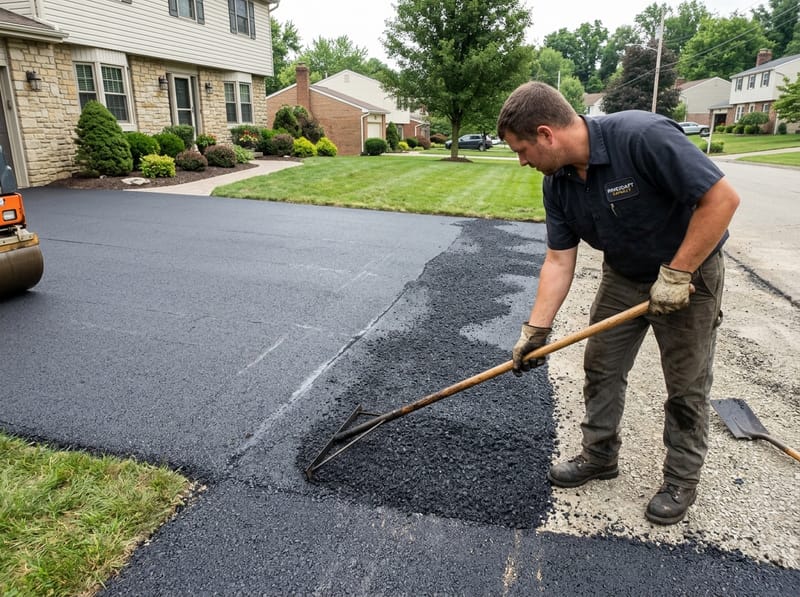
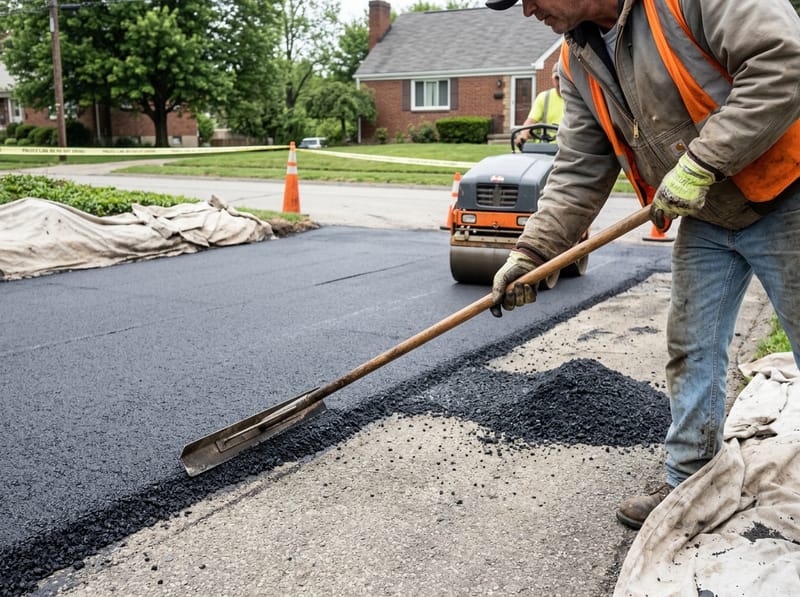
Next, the area is cleaned and prepared. Loose debris, crumbling asphalt, and unstable edges are removed so the new material has a sound place to bond. If the repair involves a pothole or broken section, the crew may square off the damaged area to create cleaner edges and a better fit for the patch.
After preparation, the repair material is installed and shaped to match the surrounding surface. The goal is a smooth, durable transition that supports traffic and helps prevent water from settling at the repair edges. In some cases, compaction is used to tighten the material and improve the finished result.
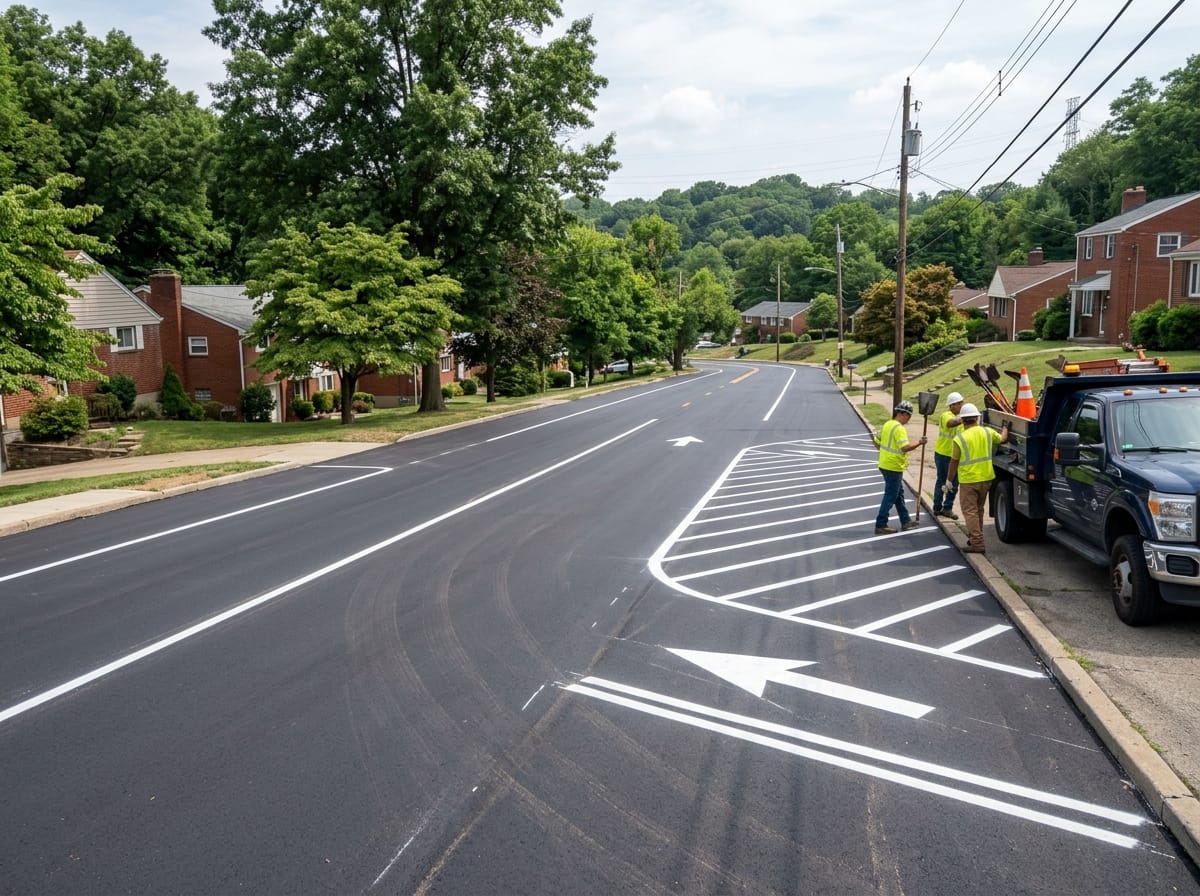
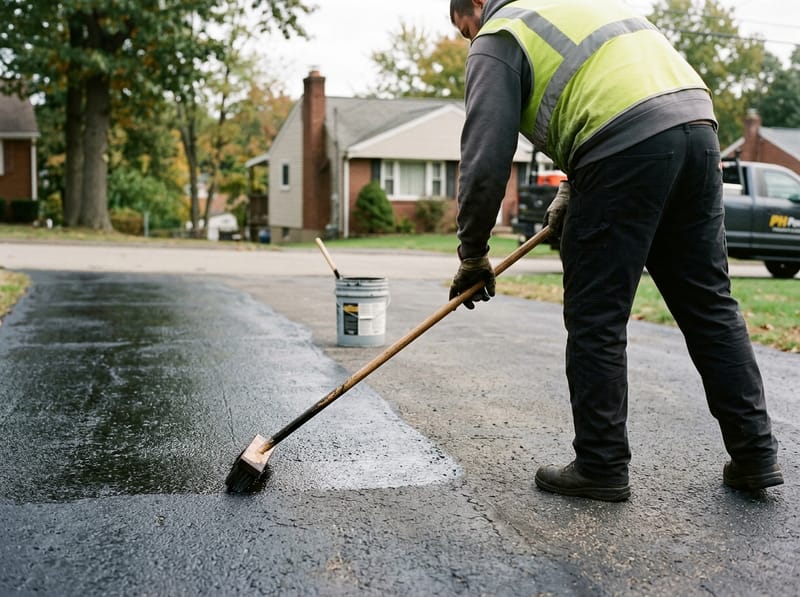
Final finishing matters as well. A careful repair should leave the driveway looking orderly and functioning properly, not just filled in. The repaired area needs to integrate with the rest of the pavement so it handles everyday use and sheds water the way it should.
This process is most effective when performed by an experienced team that understands asphalt behavior, drainage, and surface preparation. Specialized techniques can make the difference between a repair that lasts and one that breaks down again too soon.
Why Homeowners Choose Asphalt Pros of Penn Hills
Homeowners looking for asphalt repair in Penn Hills want straight answers, careful workmanship, and a team that understands local pavement conditions. Asphalt Pros of Penn Hills focuses on practical repairs that improve safety, restore appearance, and help you get more life from your existing asphalt.
You can expect clear communication, attention to detail, and repair methods matched to the actual condition of your driveway. That approach helps you avoid guesswork and gives you a better path forward, whether your pavement needs a small patch or a more involved fix.
Our work is centered on durability and function. We pay close attention to the surface, the edges, the base, and the way water moves across your property so the finished repair has a better chance of holding up under real use. That is the kind of detail homeowners want when they are investing in their driveway.
If you are dealing with cracking, potholes, uneven areas, or worn-out sections, getting the problem handled now can save you trouble later. A well-planned repair can improve your driveway, support safer daily use, and keep your Penn Hills property looking cared for.
Frequently Asked Questions
How do I know if my driveway needs asphalt repair or full replacement?
If the damage is limited to a few spots, asphalt repair is often the right choice. If the cracking, sinking, or potholes are widespread, replacement may make more sense because the underlying structure may be failing.
Can small cracks really turn into bigger problems?
Yes. Small cracks let water move into the pavement, and that moisture can weaken the asphalt and base below it. In Penn Hills, temperature changes can make the damage spread faster.
How long does an asphalt repair usually last?
That depends on the condition of the driveway, the type of damage, and how well the repair area was prepared. A well-done repair on a stable driveway can provide solid service for a long time, especially when drainage and base conditions are in good shape.
Will a repaired section blend in with the rest of my driveway?
It should blend as closely as possible, but the repaired area may still look slightly different from the older surrounding pavement. The main goal is a smooth, stable surface that performs well and protects the driveway from further damage.
What should I do if water keeps pooling on my asphalt?
Pooling water is a sign that the surface may have a low spot, drainage problem, or underlying settlement issue. An asphalt repair specialist can identify the cause and recommend the right fix so the water stops sitting on the pavement.