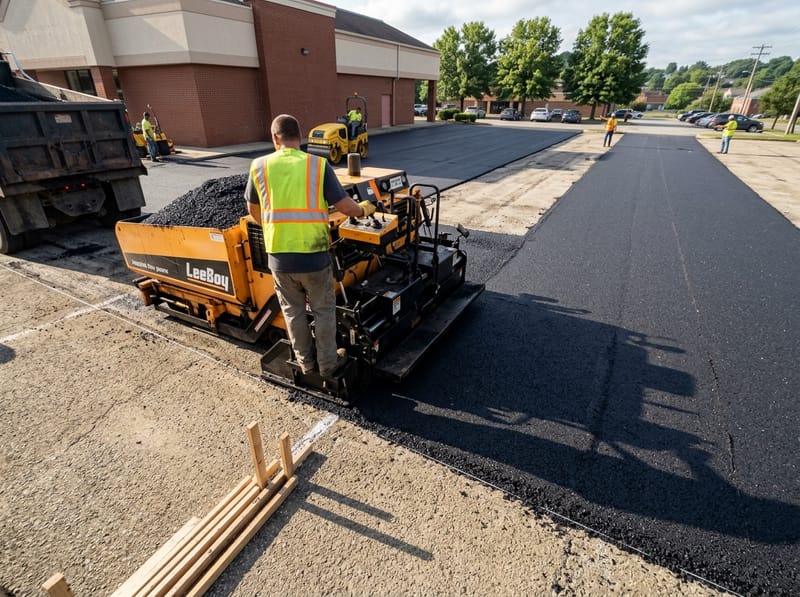
What Parking Lot Paving Involves
Parking lot paving in Penn Hills is the process of creating a durable driving and parking surface that can handle steady traffic, turning wheels, weather, and drainage needs. For a commercial property, apartment complex, church, medical office, retail center, or shared-use lot, the goal is not just blacktop. It is a pavement system that is graded correctly, compacted correctly, and finished so it performs well in daily use.
At Asphalt Pros of Penn Hills, our experienced team uses specialized techniques to prepare the base, control slope, place hot asphalt, compact the surface, and create edges that hold up under traffic. That process may include removing failed pavement, correcting soft spots, building a stable stone foundation, paving new asphalt lifts, and finishing transitions to sidewalks, curbs, or existing pavement. When the work is done right, your lot looks cleaner, drains better, and gives drivers a smoother path from the entrance to the parking space.
A well-built parking lot should do several things at once:
- Support steady vehicle traffic without rutting or breaking apart.
- Move water away from the pavement instead of letting it pool.
- Provide a smooth surface that reduces wear on vehicles.
- Make your property easier to navigate and safer for visitors.
- Improve the look of your site with a finished, polished appearance.
The paving method depends on the condition of the existing site. Some lots need a full rebuild because the base has failed. Others can be milled and resurfaced to restore the top layer without starting from zero. The right choice comes from careful inspection, not guesswork, because the base structure matters just as much as the surface you see.
When You Need Parking Lot Paving
You usually need parking lot paving when the surface has moved beyond minor patching and seal work. Common signs include widespread cracking, repeated potholes, standing water, broken edges, sinking sections, or a lot that looks worn down across most of its surface. If drivers are slowing down to avoid rough spots or customers are commenting on the condition of the pavement, the lot is already sending a clear signal.
In Penn Hills, weather swings and freeze-thaw cycles can speed up pavement wear. Water gets into small openings, freezes, expands, and pushes the pavement apart. Heavy delivery trucks, tight turning movements, and frequent braking near entrances can add more stress, especially around drive lanes, loading areas, and parking stall corners.
Parking lot paving is often the right move when you want to:
- Replace pavement that has too many cracks or patches to keep repairing.
- Fix drainage problems that keep water on the surface.
- Upgrade a lot that no longer matches the standard of your property.
- Improve safety for vehicles and pedestrians.
- Create a better first impression for customers, tenants, or visitors.
If your lot needs attention but you are not sure whether paving is the answer, a site visit helps. A good evaluation looks at the surface, the base, drainage patterns, traffic use, and the age and condition of prior repairs. That kind of review gives you a practical path forward instead of a short-term fix that fails again.
Why Parking Lot Problems Happen
Parking lot damage rarely shows up all at once. It usually starts with small changes below the surface. If the stone base was not compacted enough, if water gets under the pavement, or if traffic loads are heavier than the lot was built to handle, the structure weakens over time. Once the base moves, the asphalt above it begins to crack, sink, and break apart.
Drainage is one of the biggest causes of pavement failure. Water that sits on the surface or seeps into low spots softens the layers underneath. In cold weather, that trapped moisture expands and creates more damage. In warm weather, traffic pressure can turn those weak spots into depressions, edge breaks, or potholes.
Other common causes include:
- Poor grading that sends water to the wrong areas.
- Thin pavement sections in high-traffic lanes.
- Sharp turning movements near entrances and exits.
- Neglected cracks that let water reach the base.
- Old striping layouts that force drivers into tight, stressful patterns.
Understanding the cause matters because parking lot paving should solve the underlying issue, not just cover it. If the root problem is drainage, the new pavement should be graded with that in mind. If the issue is a weak foundation, the work should address the base before the new asphalt goes down. That is where industry expertise and careful preparation make a real difference.
What Affects Cost
The cost of parking lot paving in Penn Hills depends on the condition of the existing lot and the amount of work needed to build a reliable surface. A lot with a stable base and limited surface wear is very different from a lot with soft spots, drainage problems, or widespread failure. The more preparation required, the more labor and materials the project will need.
Several factors influence the final scope:
- The size and layout of the lot.
- How much old pavement must be removed or milled.
- Whether the base needs repair or full reconstruction.
- How much grading is needed to improve drainage.
- The number of entrances, curbs, islands, and transitions.
- Traffic control needs during the work.
- Whether striping and markings are part of the project.
Timing also plays a role. Projects that require careful phasing to keep a property open can take more planning than a straightforward open-site installation. Tight access, limited staging space, and special scheduling needs can all affect how the work is organized. A clear site assessment helps you understand what is essential, what can wait, and where the project money should go for the strongest long-term result.
The best value is not always the lowest upfront price. A low-cost job that skips base repair or drainage correction can fail early and create bigger expenses later. A well-planned paving project focuses on durability, function, and a clean finish that supports the property for the long haul.
Repair vs Replacement
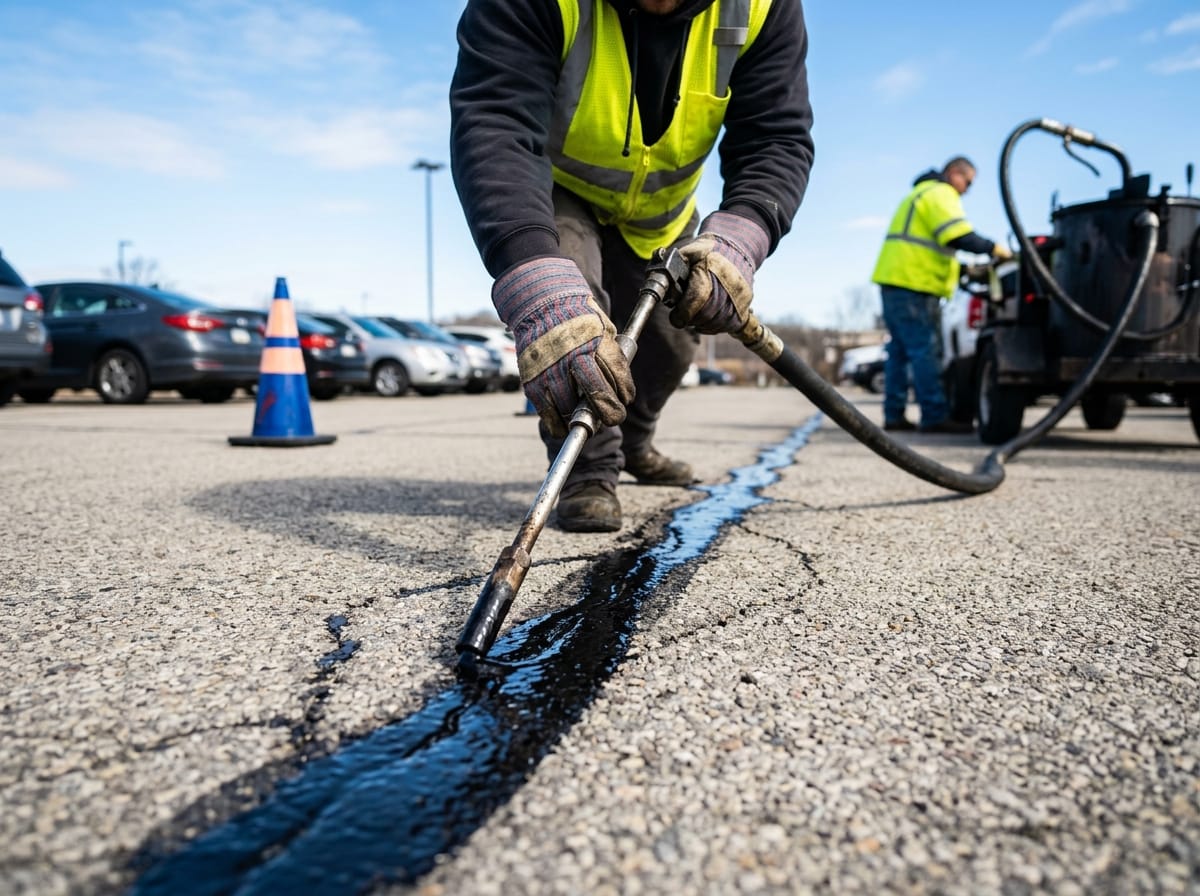
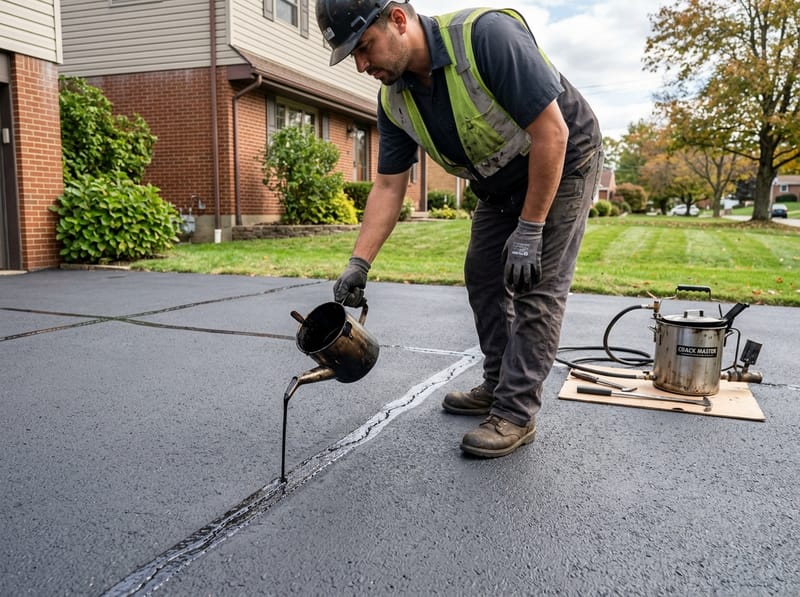
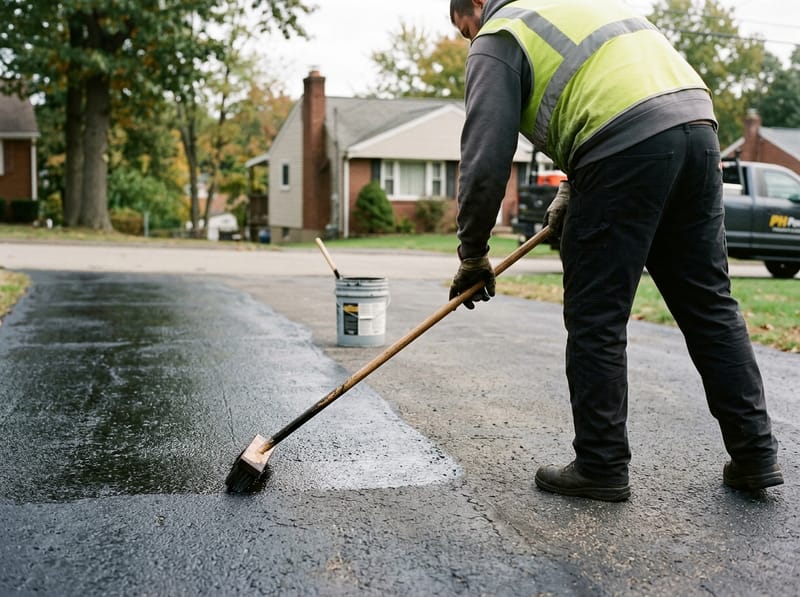
Repair makes sense when the lot still has a strong foundation and the damage is limited to isolated areas. In those cases, patching, crack treatment, or targeted milling can restore function without rebuilding the entire surface. Replacement is the better choice when the lot has widespread failure, repeated potholes, deep cracking, soft spots, or drainage issues that keep coming back.
If the pavement is only worn on the top layer, resurfacing may be enough to restore smoothness and appearance. If the base is broken or the lot is settling in multiple areas, a new paving build is usually the smarter option. The difference is important because surface fixes can make a lot look better for a while, but they cannot solve a weak foundation.
A practical decision often comes down to three questions:
- Is the damage isolated or spread across most of the lot?
- Does water drain away from the pavement or sit in the same places?
- Is the structure underneath still stable enough to support new asphalt?
When you are deciding between repair and replacement, the most useful step is an honest inspection from a team that understands how pavement behaves under traffic and weather. Asphalt Pros of Penn Hills looks at the full picture so you can choose the option that makes sense for your property, budget, and long-term plans.
Our Parking Lot Paving Process
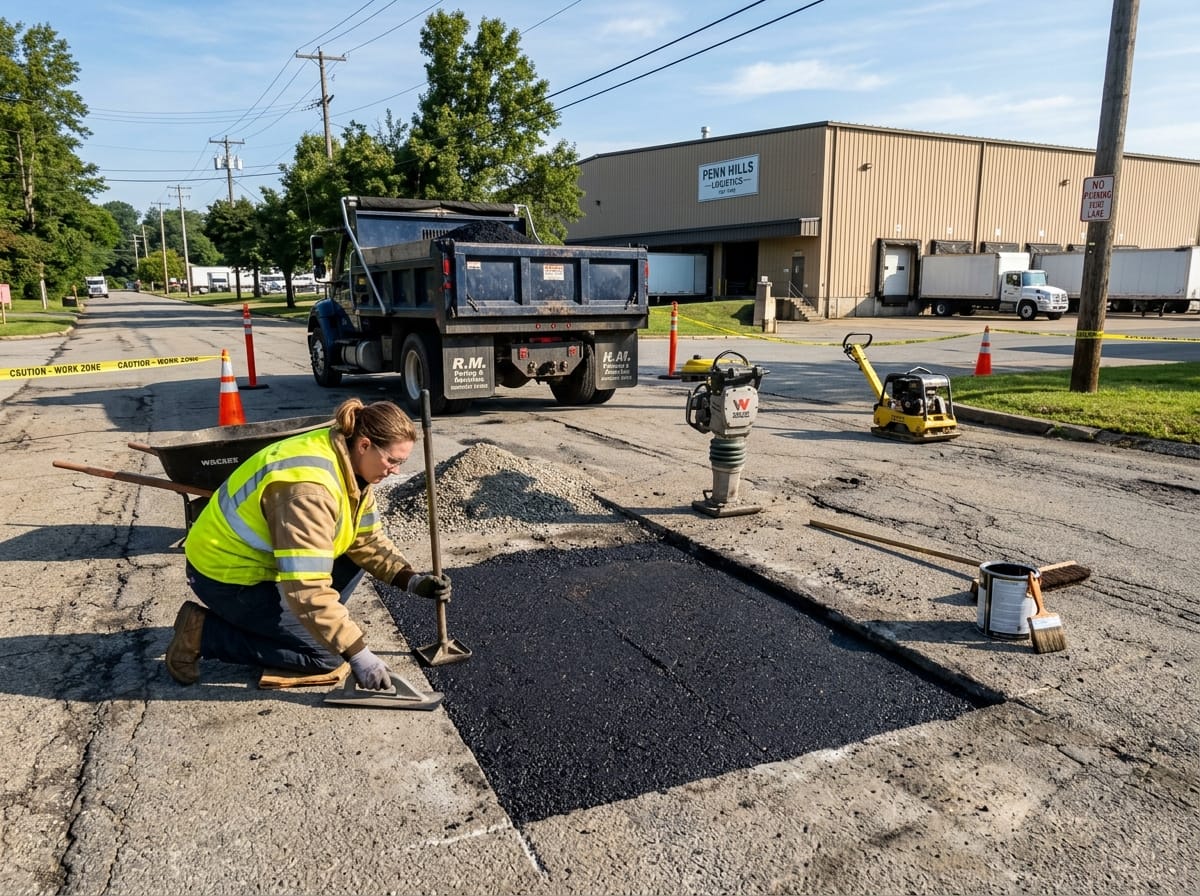
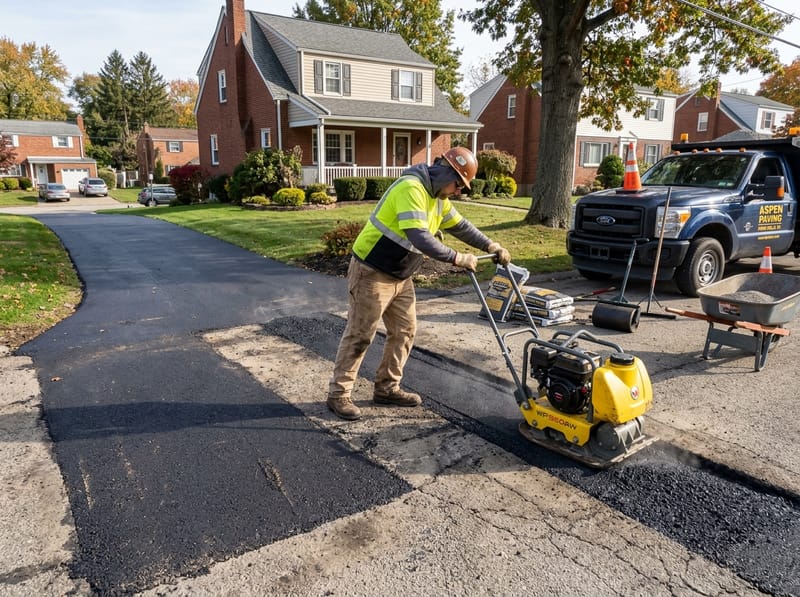
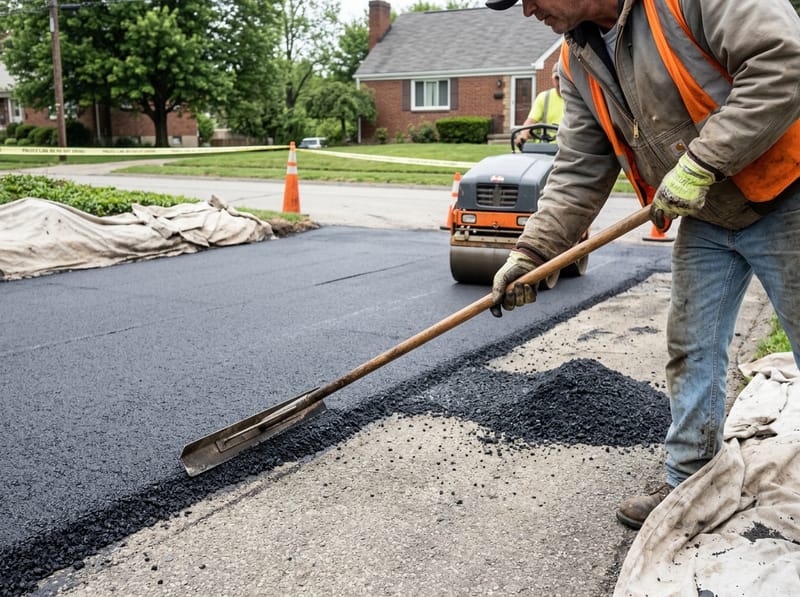
A strong parking lot paving project follows a clear sequence. First, the site is evaluated so the team can identify drainage concerns, weak spots, edges, and access points. Next, the area is prepared by removing damaged pavement, cleaning the surface, and correcting the base where needed. This prep stage is one of the most important parts of the job because new asphalt performs only as well as the foundation beneath it.
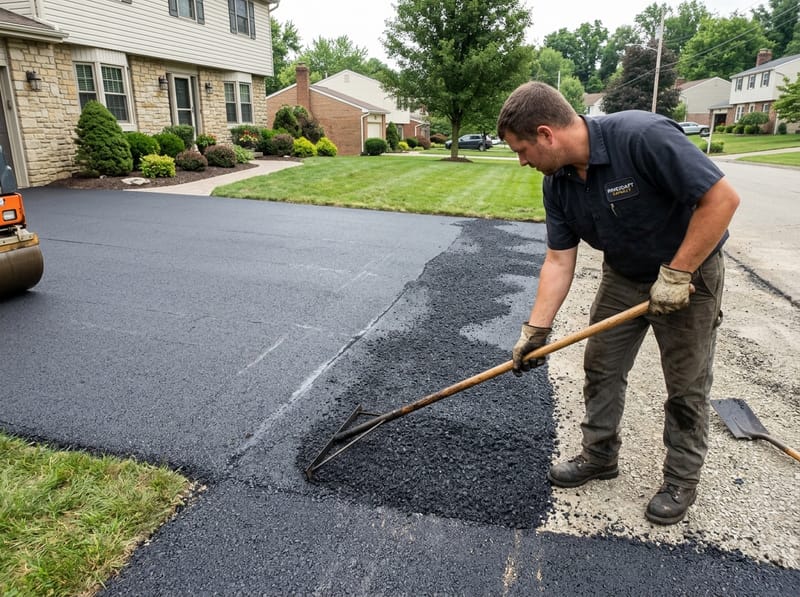
After prep, the paving team places and compacts asphalt in controlled passes. The material has to be handled at the right temperature and placed with the right depth so it bonds properly and compacts into a dense, durable surface. Edges, joints, and transitions are finished carefully so the lot does not break down early at its most vulnerable points.
Depending on the scope, the work may also include:
- Grading to direct water toward the proper runoff points.
- Milling to remove worn top layers before resurfacing.
- Base repair in areas that have sunk or softened.
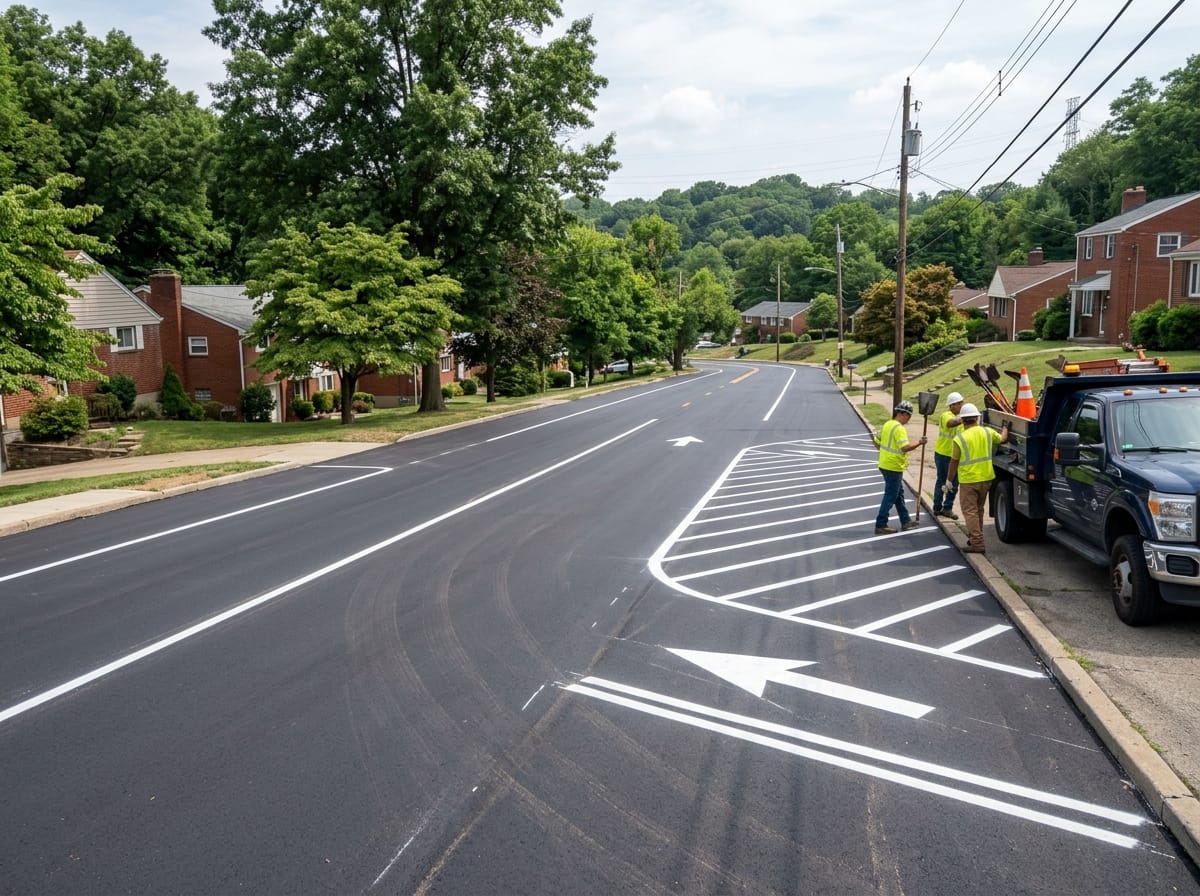
- Striping layout preparation after the asphalt has cured.
- Final cleanup so the property is ready to use.
This process is designed to give you a lot that not only looks good on day one, but also performs under real traffic. The result is a cleaner entrance, a smoother drive path, and a surface that supports daily use with fewer disruptions.
Why Penn Hills Properties Benefit
Parking lot paving in Penn Hills is not just about replacing worn asphalt. It is about making your property easier to use, easier to maintain, and easier to trust. For businesses, a smooth lot helps customers enter and exit without hesitation. For property managers and community organizations, good pavement reduces complaints, improves safety, and supports a more organized site layout.
Penn Hills properties also deal with the realities of local weather and traffic. A pavement system that is built with the site conditions in mind can handle those demands better than a surface that was patched together without a plan. That is why careful grading, sound base work, and skilled compaction matter so much on every project.
When your parking lot is built right, you get several practical benefits:
- Better curb appeal for visitors and tenants.
- Cleaner traffic flow in and out of the property.
- Fewer trip hazards and vehicle impact points.
- Less water damage to the pavement structure.
- A more dependable surface for daily use.
If you want a parking lot that reflects well on your property and supports long-term use, a professional paving plan is the right foundation. Asphalt Pros of Penn Hills brings an experienced team, specialized techniques, and a careful approach to every parking lot paving project in Penn Hills, PA.