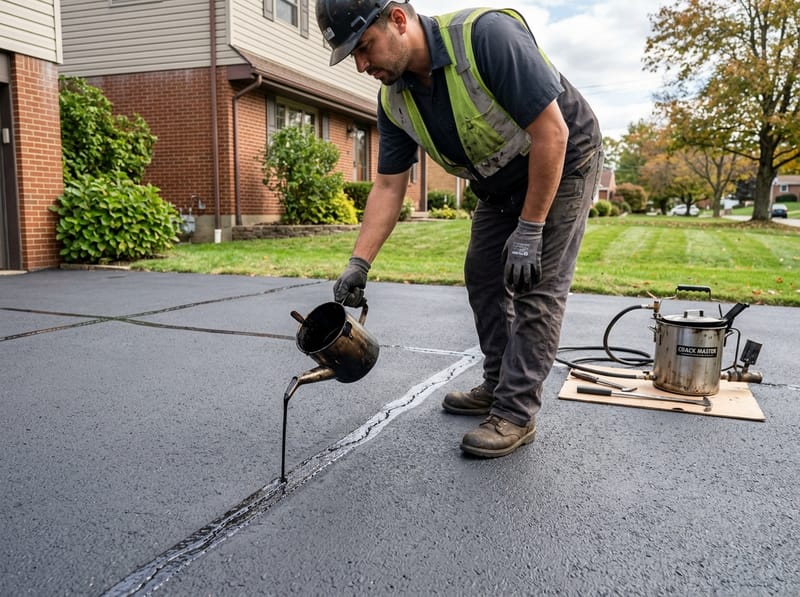
What Crack Sealing Involves in Penn Hills
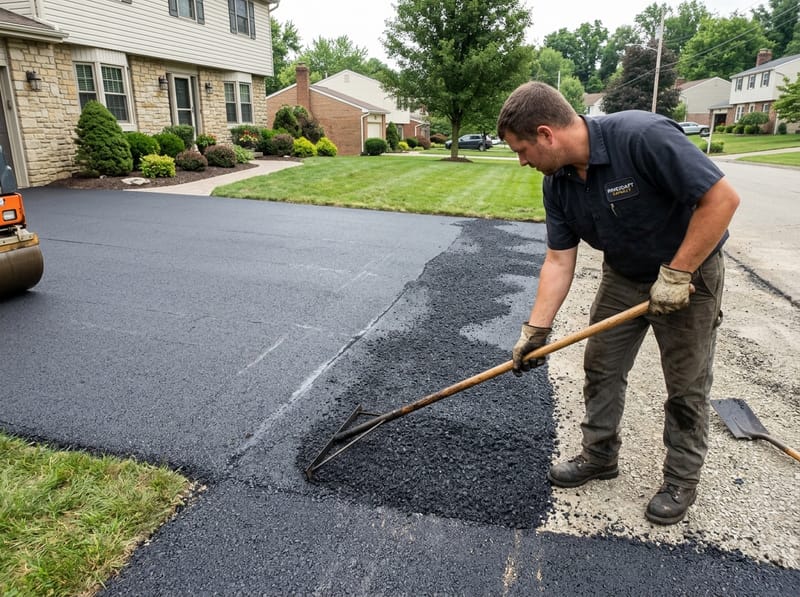
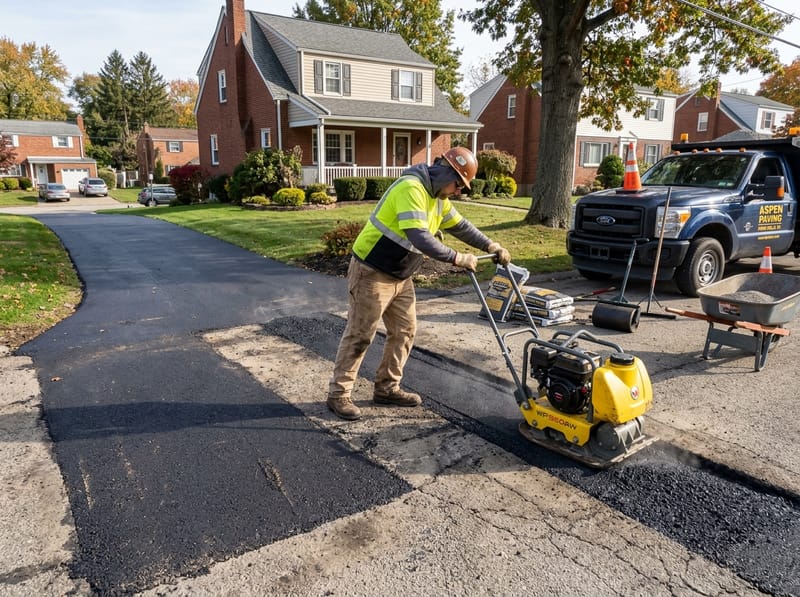
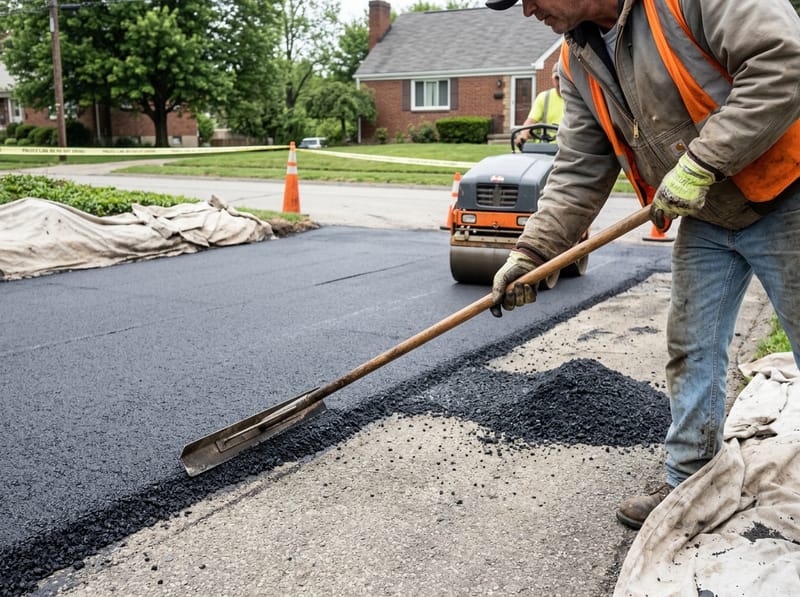
Crack sealing in Penn Hills is a preventive asphalt repair service that focuses on the openings already showing in your pavement. The goal is simple: clean the crack, prepare it correctly, place a flexible sealant inside the opening, and create a barrier that helps keep water out. That barrier matters because once water gets under the surface, the crack can spread, edges can crumble, and the pavement can start breaking down faster than you expect.
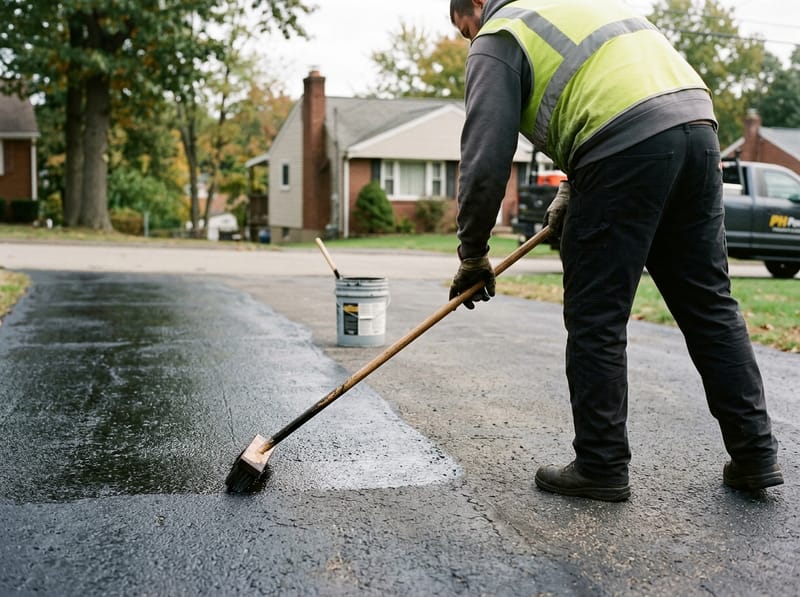
For homeowners and property managers in Penn Hills, the work usually starts with a close look at the crack pattern. Our experienced team checks whether the pavement has isolated linear cracks, wider openings, or areas that are showing signs of deeper structural trouble. From there, the surface is cleaned so the sealant can bond well. Loose gravel, dirt, plant growth, and old debris have to come out first, because a crack filled over contamination will not perform the way it should.
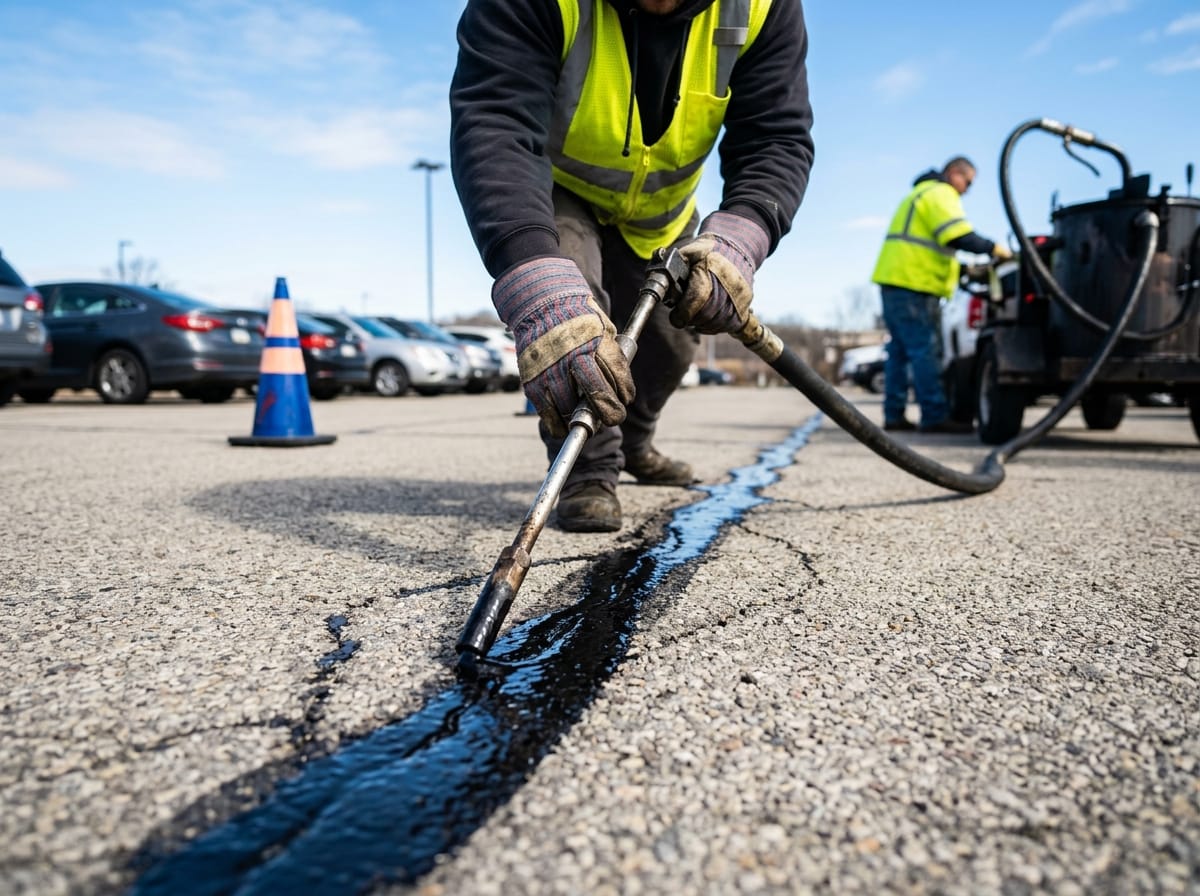
After prep, the sealant is applied into the crack and tooled so it sits properly in the opening. The material is chosen for flexibility, because asphalt expands and contracts as temperatures change. That flexibility is what allows crack sealing to move with your pavement instead of hardening and splitting away. When the repair is done well, the crack becomes much less likely to admit water, and that helps your driveway or lot stay stronger through changing weather.
What you get from the service:
- A cleaner, more finished-looking asphalt surface
- Better protection against moisture intrusion
- Less chance that small cracks turn into larger breaks
- A practical maintenance step that supports the rest of your pavement care
Asphalt Pros of Penn Hills uses specialized techniques that are designed for local pavement conditions, not a one-size-fits-all approach. That matters because cracks on a shaded residential driveway do not always behave the same way as cracks on a busier parking area. The right method depends on the shape of the crack, the surrounding surface, and how far the damage has already progressed.
When You Need Crack Sealing
You usually need crack sealing in Penn Hills when you begin to see openings that run through the asphalt surface but the surrounding pavement is still structurally sound. This service is especially useful for homeowners who want to address damage early, before it spreads into larger repairs. If your driveway still feels solid underfoot or under vehicle traffic, but you can see cracks starting to widen, crack sealing is often the right next step.
Common signs that your pavement is ready for crack sealing include visible lines in the surface, cracks that collect dirt or weeds, and openings that seem to grow after wet weather or colder nights. You may also notice rough edges around the crack or a dark line that stays open instead of closing back up. When cracks begin to admit water, the problem becomes more urgent because moisture can work its way below the top layer and weaken the pavement from underneath.
Here are a few practical situations where Penn Hills property owners often choose this service:
- Your driveway has a few long cracks, but the surface is otherwise stable
- You want to protect recently paved asphalt from early breakdown
- You see water sitting in or around cracks after rain
- Small openings are starting to catch debris or plant growth
- You are trying to slow down further damage before winter weather arrives
If you are unsure whether your pavement needs sealing or a larger repair, a close inspection helps. A seasoned asphalt crew can tell you whether the damage is still in the maintenance stage or whether the surface has moved into repair territory. That distinction saves you from spending money in the wrong place.
Why Asphalt Cracks Happen
Cracks form for a few familiar reasons, and most of them make sense once you think about what your pavement goes through every day. Asphalt moves as temperatures change. It also carries the weight of vehicles, handles repeated turning and stopping, and reacts to moisture that gets into small surface openings. In Penn Hills, those factors can combine over time and create the kind of cracking that starts small but keeps growing.
One major cause is water. When water gets into a tiny crack and then the weather changes, the pavement can expand and contract around that moisture. That movement stresses the surface. If the crack is left open, the edge can weaken, and the damage becomes easier for traffic to widen. Freeze-thaw cycles are especially rough because they push and pull on the pavement repeatedly.
Age and surface wear also matter. Asphalt that has been exposed to sun, traffic, and weather for a long period tends to become less flexible. Once the pavement loses flexibility, it is more likely to crack instead of bending slightly under stress. Heavy vehicles, tight turning movements, and repeated braking can make that process worse in driveways and parking areas that see regular use.
Other common causes include poor drainage, settling in the base, and small construction flaws that do not show up right away. If water is not draining away properly, it lingers near the pavement and increases the chance of cracking. If the base under the asphalt shifts, the surface above it has less support and can split. Even a driveway that looked fine at first can begin to show cracking once the underlying support changes.
Crack sealing helps because it addresses the symptom before it becomes a bigger structural issue. It does not rebuild the entire pavement system, but it does block one of the biggest enemies of asphalt: uncontrolled water intrusion.
What Affects Crack Sealing Cost
The cost of crack sealing in Penn Hills depends on the condition of your pavement, the amount of prep needed, and how much sealing material is required to do the job correctly. There is no honest way to quote a real service price without looking at the surface first, because two driveways with the same visible crack count can still require very different levels of work.
Several factors can shape the final scope of the job. The first is the size of the crack pattern. A small number of clean, accessible cracks is easier to handle than a network of openings that run across a large surface. The second is how clean the cracks are before work begins. If cracks are packed with dirt, loose aggregate, old material, or plant growth, more preparation is needed to create a proper seal.
The condition of the surrounding pavement also matters. If the asphalt around the crack is still solid, sealing is usually straightforward. If the edges are breaking down, crumbling, or separating from the base, the repair may require more attention. Access can play a role too. A flat, open driveway is easier to work on than a tight area with limited room for equipment and movement.
Other cost factors include whether the cracks are isolated or widespread, whether drainage issues are contributing to the damage, and whether the pavement needs complementary maintenance such as patching or sealcoating later. The key point is this: crack sealing is most effective when it is matched to the actual condition of your asphalt, not just the visible line on the surface.
Homeowners often get the best value when they treat crack sealing as a timely maintenance step instead of waiting until the pavement fails around the cracks. A small, well-executed repair is usually easier to manage than a larger fix after the damage has spread.
Crack Sealing vs. Replacement
Crack sealing and replacement solve very different problems, and knowing the difference helps you make a smarter decision for your property. Crack sealing is the better choice when the asphalt still has good overall structure and the main issue is open lines in the surface. It protects what is already there and helps delay more serious damage.
Replacement becomes more appropriate when the pavement has widespread structural failure. If you are seeing deep alligator cracking, repeated potholes, major settlement, or large areas where the base has failed, sealing individual cracks will not solve the root problem. In those cases, the pavement has moved beyond maintenance and into repair or rebuild territory.
A simple way to think about it is this: if the asphalt is still fundamentally sound but has openings that need protection, crack sealing is the right move. If the pavement is breaking apart across large sections, replacement may be the more practical long-term solution. That is why a careful inspection matters before any recommendation is made.
For many Penn Hills homeowners, crack sealing is the step that buys time, slows deterioration, and keeps the surface serviceable while they plan future work. It is a focused repair with a clear purpose. Replacement, on the other hand, is a larger investment aimed at restoring a failed surface. Choosing the correct option keeps your money working where it helps most.
Why Homeowners in Penn Hills Choose Asphalt Pros
Asphalt Pros of Penn Hills brings extensive experience, a detail-focused process, and a practical understanding of local pavement conditions. Our team works with the kind of asphalt issues Penn Hills property owners see most often, from early residential driveway cracking to more active surface wear around parking areas. We approach each job with care, using specialized techniques that support long-lasting results rather than quick cosmetic fixes.
Homeowners often want a contractor who explains what is happening in plain language and respects their property during the work. That means careful prep, clean application, and clear communication about what crack sealing can do and what it cannot do. If your pavement is a good candidate for sealing, the goal is to preserve it as efficiently as possible. If it needs a different kind of repair, you deserve that honest answer too.
Crack sealing in Penn Hills is most effective when it is done before the damage spreads. That is why an early inspection and a timely repair can make a meaningful difference in how your driveway or lot ages over time.