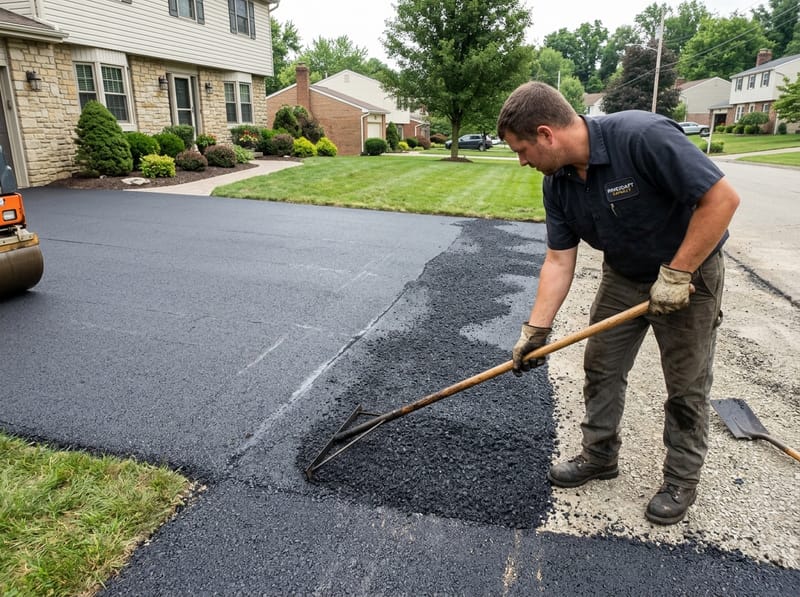
What This Service Involves
Driveway paving in Penn Hills, PA is the process of building or rebuilding the surface that vehicles use every day, starting with the ground underneath and ending with a smooth top layer that fits your home. This is not just a matter of pouring material and walking away. A lasting driveway depends on careful site prep, correct grading, a stable base, clean edges, and proper compaction from start to finish.
At Asphalt Pros of Penn Hills, our master craftsmen use specialized techniques to create a driveway that performs well under daily traffic and seasonal weather changes. We begin by evaluating how water moves across your property, because drainage problems are one of the biggest threats to a long-lasting driveway. If the old surface is failing, we remove damaged material as needed, shape the subgrade, add and compact the base, and then place the new asphalt with attention to slope, edge support, and finish quality.
A typical driveway paving project in Penn Hills includes several important stages:
- Measuring the driveway area and reviewing access to the property
- Checking the old surface and the condition of the base below it
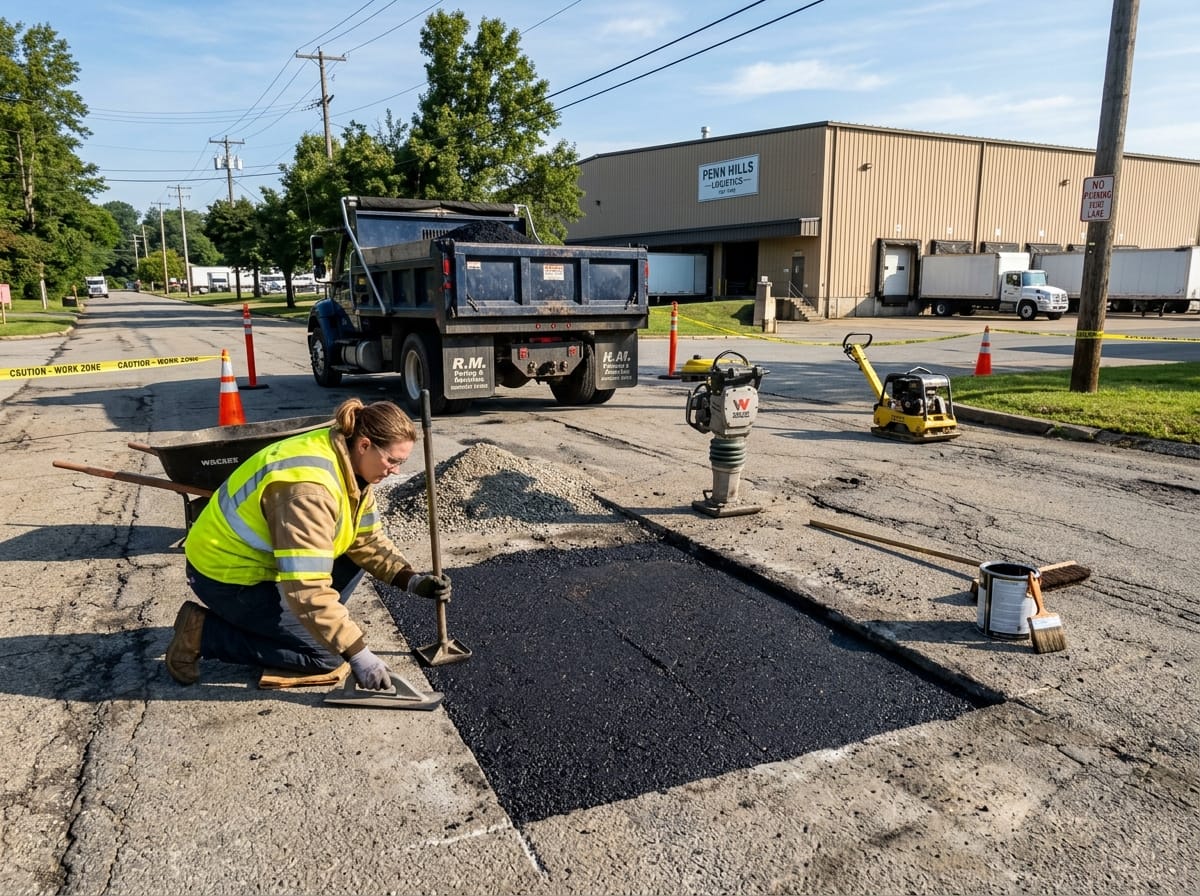
- Removing loose, broken, or unstable material when replacement is the right choice
- Regrading the surface so water drains away from the home and garage
- Building a compacted stone base that supports vehicle weight
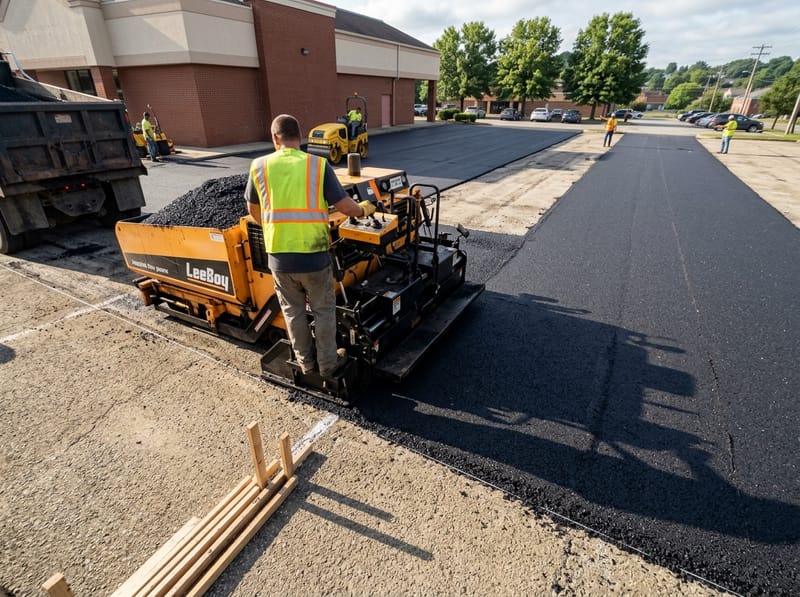
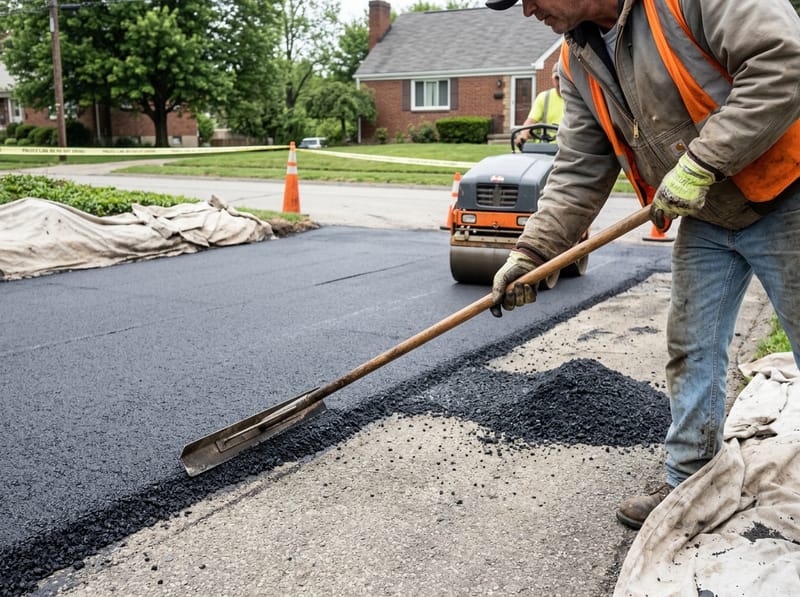
- Installing the new asphalt surface with a uniform, even finish
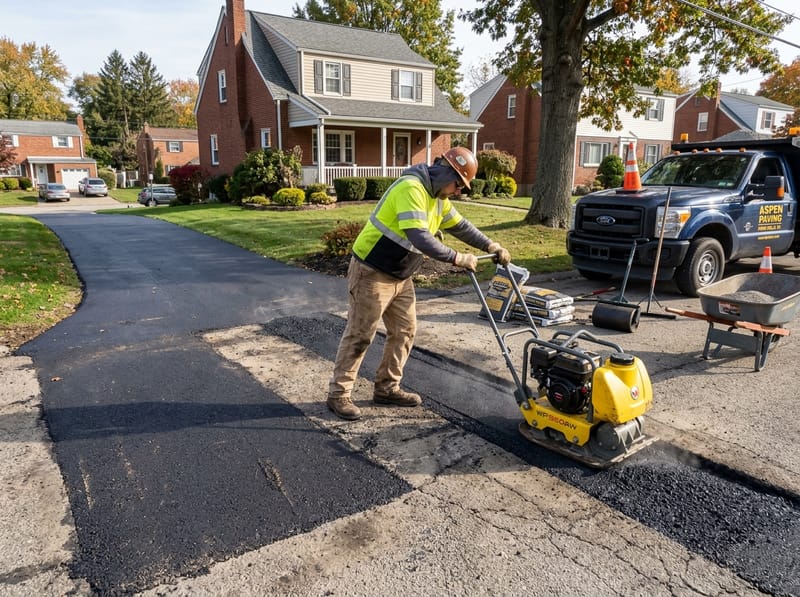
- Rolling and compacting the driveway so it sets up smoothly and evenly
When each layer is built correctly, you get more than a nicer-looking driveway. You get a surface that feels solid under your tires, sheds water better, and holds up more reliably as the seasons change in Penn Hills.
When You Need This Service
Driveway paving in Penn Hills, PA is the right choice when your current driveway is beyond spot repairs, or when you are building a new home and need a dependable surface from day one. Many homeowners start looking at paving after they notice repeated cracking, soft spots, standing water, or areas that look sunken and uneven. These signs usually mean the driveway is no longer supporting itself the way it should.
You may need driveway paving if your driveway is making daily use harder than it should be. If you feel bouncing, sinking, or rough transitions when pulling in and out, the surface may have failed underneath. If water pools in the same area after rain, the slope may be wrong or the base may have shifted. If the edges are crumbling, the surface is thinning, or patches keep failing, a more complete paving solution can be the better long-term answer.
Common situations that point toward driveway paving include:
- Large cracks that keep spreading instead of staying stable
- Uneven surfaces that hold water after storms
- Soft spots that flex when vehicles cross them
- Old patchwork that no longer blends with the surrounding surface
- Drainage issues near garages, walkways, or low spots
- A driveway that looks tired enough to hurt the look of the whole property
If you are unsure whether your driveway needs repair or full paving, a close inspection of the surface and base can reveal the difference. In Penn Hills, older driveways often show wear from weather swings, repeated use, and settling around the edges, so the right answer depends on what is happening below the top layer, not just what you can see at a glance.
Why Driveway Problems Happen
Driveway paving problems usually start with the base, the drainage, or both. Homeowners often assume the visible cracks are the main issue, but cracks are usually the result of movement underneath. If the soil shifts, the stone base loosens, or water gets trapped below the surface, the driveway starts to move. Once that movement begins, the top layer can break apart, sink, or split open.
Weather plays a major role in Penn Hills. Rain, freeze-thaw cycles, snowmelt, and repeated temperature changes all put stress on asphalt and the layers below it. Heavy vehicles can make the damage worse, especially when the driveway already has weak spots. Poor original grading can also lead to trouble, because water that sits on the surface or runs toward the wrong area slowly wears the driveway down.
Other common causes of driveway failure include:
- A base that was not compacted enough during the original build
- Water that runs under the driveway instead of away from it
- Edge breakdown caused by cars driving too close to the sides
- Tree roots or underground movement that pushes the surface up
- Thin or aging asphalt that can no longer handle daily use
- Repeated temporary fixes that cover symptoms without correcting the cause
Understanding the cause matters because the best paving solution depends on the problem underneath. If the base is stable, a repair may hold up well. If the base is weak, a surface-only fix usually fails again. That is why an experienced team looks at drainage, slope, soil support, and the overall condition of the driveway before recommending the next step.
What Affects Cost
The cost of driveway paving in Penn Hills, PA depends on the project details, not just the size of the driveway. Two driveways that look similar from the street can require very different amounts of prep work. The biggest factor is often what is happening beneath the surface. If the base is solid, the project may be more straightforward. If the base needs major rebuilding, the work becomes more involved because the foundation has to be corrected first.
Other factors can raise or lower the amount of labor and material needed. A driveway with sharp turns, tight access, or complicated edges usually takes more care than a simple straight layout. Drainage corrections can also affect the scope, especially if water needs to be redirected away from a garage, sidewalk, or low-lying area. If the existing driveway has to be removed before new paving begins, that adds another layer of work.
Factors that often influence driveway paving cost include:
- How much of the old driveway must be removed
- Whether the stone base needs repair or rebuilding
- How much grading is needed for proper drainage
- The shape of the driveway and how easy it is to access
- Edge support and transitions near roads, garages, or walkways
- Surface condition, including cracking, rutting, and soft spots
- Any added work for drainage correction or tie-ins to existing pavement
Homeowners sometimes try to compare driveway paving only by the visible surface, but that can be misleading. A well-built driveway is a layered system, and the hidden work beneath the top layer is often what determines how long the finished surface performs. When you understand the site conditions, the estimate makes more sense and you can judge the value more clearly.
Repair vs. Replacement
Driveway paving in Penn Hills, PA often comes down to one question: can the driveway still be saved with repair, or is replacement the smarter move? If the damage is limited to small cracks, a few surface flaws, or isolated trouble spots, a targeted repair may be enough. But if the driveway has repeated failures, widespread cracking, major settling, or drainage problems that keep coming back, replacement is usually the stronger long-term choice.
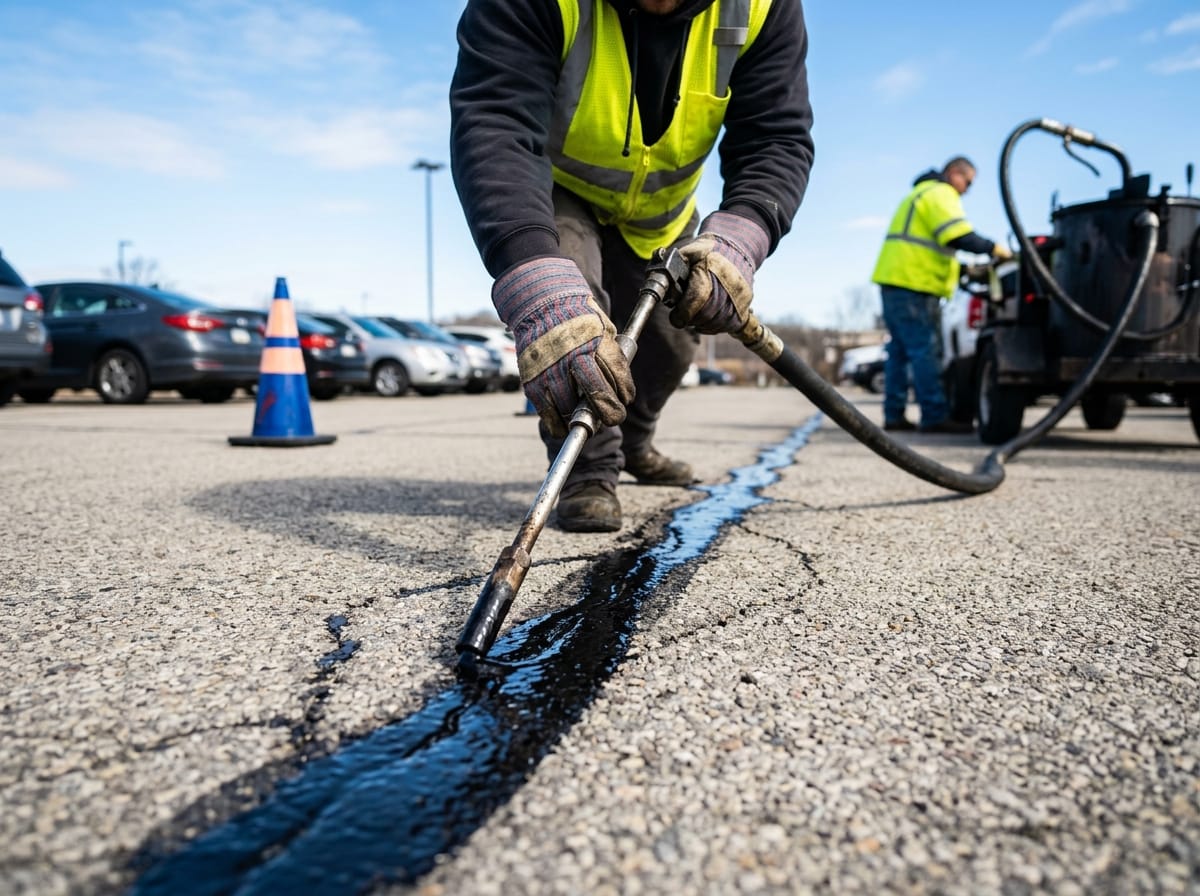
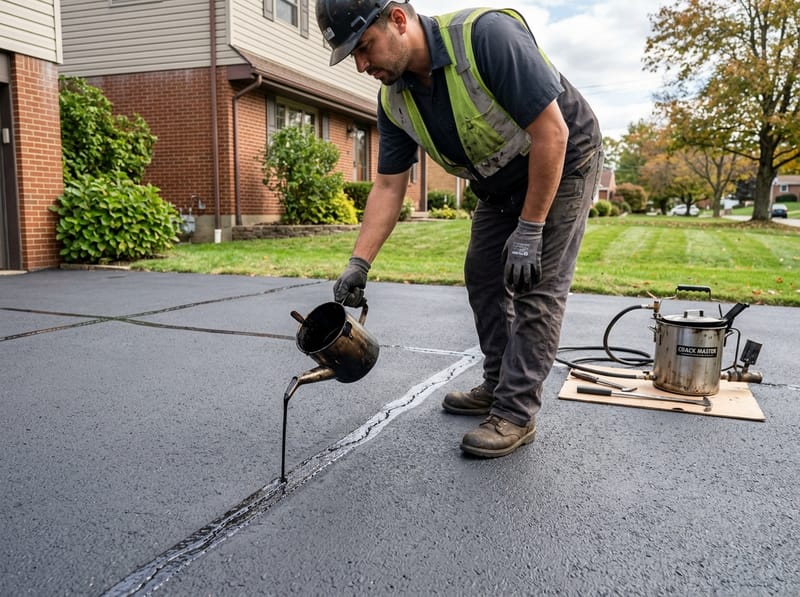
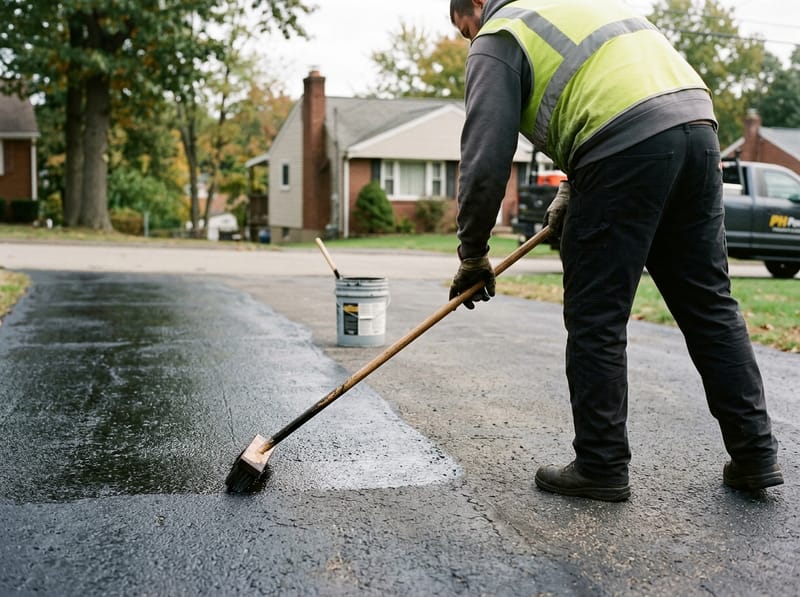
Repair works best when the base is still stable and the damage is mostly on the surface. In that case, patching, crack treatment, or a resurfacing approach can restore use without rebuilding everything. Replacement makes more sense when the structure underneath has already failed. If water is pooling, the driveway is sinking, or the edges are breaking apart in multiple places, a new build gives you a clean start and lets the foundation be corrected the right way.
A simple way to think about the choice is this: repairs treat isolated problems, while replacement solves broader structural issues. If you keep fixing one area after another, the driveway is telling you that the underlying system is no longer working. A full paving project gives you the chance to reset the grade, rebuild the base, and finish with a surface designed for the way your property is actually used.
How We Build a Strong Driveway
Asphalt Pros of Penn Hills uses an organized process so your driveway paving project in Penn Hills, PA is built for long-term performance, not just quick curb appeal. The work starts with a careful look at the property, because a driveway should fit the way water moves, how vehicles enter and exit, and how the home is laid out. Once the plan is set, we prepare the surface so the new driveway has the best possible foundation.
That preparation is where a lot of the quality comes from. Our team shapes the base so it supports the finished surface evenly, then compacts each layer to reduce future movement. Good compaction matters because loose material under the driveway can lead to sinking, cracking, and uneven wear later on. We also pay attention to the edges, since weak edges are often the first places a driveway starts to break down.
Our paving process focuses on these details:
- Correct slope so water drains away instead of sitting on the surface
- Strong base support so the driveway can handle repeated use
- Clean transitions at the garage, apron, and street connection
- Even placement so the finished driveway looks smooth and uniform
- Careful compaction to help the surface set up solidly
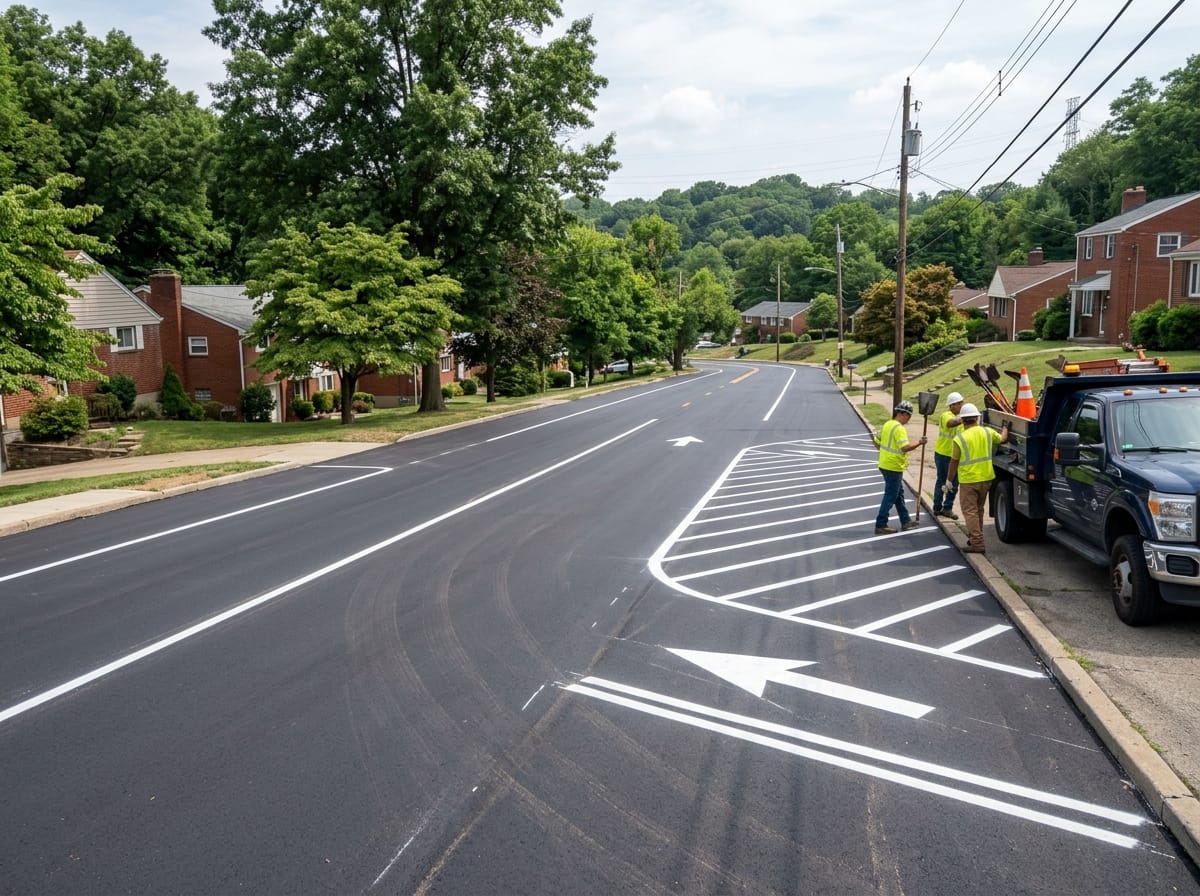
This combination of planning, specialized techniques, and industry expertise is what helps create a driveway that feels solid when you drive on it and looks sharp from the street. For Penn Hills homeowners, the goal is not only a better surface today, but a driveway that keeps doing its job through changing seasons and everyday traffic.
How To Care for Your New Driveway
Once your driveway paving project is complete, a little care goes a long way. The surface needs time to settle into its final strength, so it is wise to avoid harsh treatment right away. After that, regular maintenance helps preserve the look and performance of the driveway. Simple habits can reduce wear, limit water intrusion, and keep the surface from breaking down early.
Good driveway care in Penn Hills starts with keeping water moving away from the surface. Make sure nearby downspouts, landscaping, and runoff patterns are not sending water back onto the driveway. Try to avoid sharp turns in one place, because repeated tire stress can wear the same area faster. If you notice a crack, soft spot, or drainage change, addressing it early is usually easier than waiting for the damage to spread.
Helpful care habits include:
- Keeping the driveway clear of debris that traps moisture
- Watching for pooling water after heavy rain
- Limiting heavy stress on fresh edges and corners
- Noticing early wear before it becomes a larger problem
- Scheduling maintenance when small issues appear
With the right installation and routine attention, your driveway can stay cleaner, stronger, and easier to use. If you are comparing driveway paving options in Penn Hills, PA, focus on who is building the base, how the slope is handled, and whether the finished work is designed around your property instead of treated like a one-size-fits-all job.